Fly Fishing for Salmon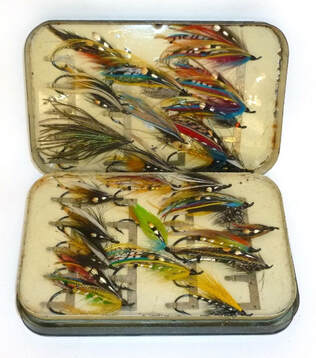
Guided Fly Fishing for Salmon
We provide helpful, knowledgeable and friendly fishing guides who know the river very well. Our guides are on hand to help you catch that fish and provide tuition and assistance if needed. Salmon Fishing on the Bandon River Wild Atlantic Salmon have been migrating back to the Bandon River for hundreds of years. Every year these amazing fish make their return journey from the North Atlantic Sea and travel back to the very rivers they hatched in. The Bandon River is well known locally for its ability to produce big salmon with many double figure fish weighing up to 15lb to 20lb caught every year. The fishing season starts from February 15th and ends on September 30th each year. The river is best fished for salmon after much rain has fallen which in turn encourages salmon to travel the river. Popular local salmon flies that work well are the Hairy Mary, Silver Doctor, Cascade, Collie Dog and Black Silver. Salmon Fishing Rules In Ireland, Atlantic Salmon are enshrined as a protected fish under strict EU and Irish law. A salmon fishing licence is required if you are to fish for salmon. Gill tags are provided with your licence which may entitle you to keep a fish for eating depending on annual bylaws in place for that season. These licences are available to buy in most local tackle stores. For more detailed information please visit Inland Fisheries Ireland at https://www.fisheriesireland.ie Rod & Line Setup The Bandon is a small to medium sized spate river so there is no need for a large 14/15 foot double handed spey rod. An 11 foot 8/9 weight switch rod or 12 foot 10/11 weight double hander will suit this river perfectly. Floating line is the preferred line of choice. If you need to get the fly down deep, then we recommend you use an attachable sinking tip line to get the fly down to where the salmon are in the pools. |

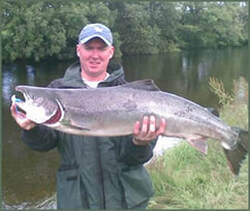
On the 7th July 2008 Bill Canning from Kilkenny, while spinning with a "Blue Fox" spinner on the River Bandon club waters hooked this magnificent salmon. It weighed an impressive 28 lbs. 3 oz. The salmon is on display in the bar of the Munster Arms Hotel Bandon to this day.
|